Already Signed up?
Magic link sent. Check your email.
API not online - using temp session system


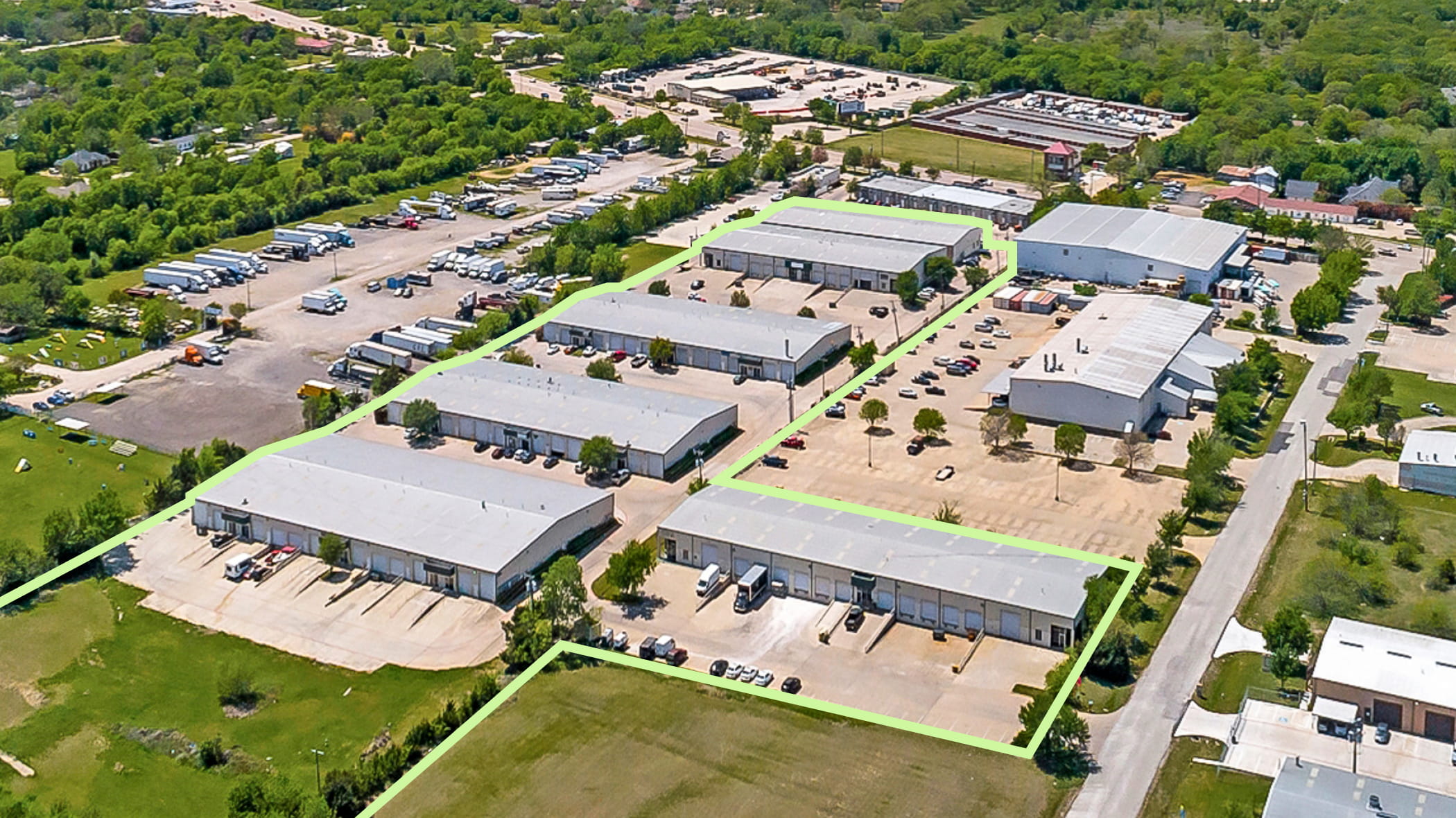
Arlington Industrial is a six-building, 170,390 square foot infill shallow bay logistics property located in Arlington, Texas.
Texas

Arlington Industrial is a six-building, 170,390 square foot infill shallow bay logistics property located at the midpoint between Dallas and Fort Worth, with direct access to four major highways. Lightstone is acquiring the property at approximately $140 per square foot — roughly 11% below comparable DFW shallow bay sales identified by Lightstone and approximately 45% below Lightstone's internally estimated replacement cost — at a projected 6.2% going-in cap rate, providing meaningful yield from day one. As of August 2026, the property is 97% leased across 47 suites to 25 diversified tenants, with the largest occupying only about 7% of the space. The asset sits in the Great Southwest/Arlington submarket, among the tightest in the metroplex at roughly 7.8% vacancy, where just two comparable new buildings exist within a ten mile radius. In-place rents sit approximately 14% below market based on our internal assumptions., and because the majority of leases roll during the projected hold, Lightstone can stagger rent resets to market as leases expire, capturing potentially embedded upside while preserving steady cash flow.











No. There is no official, standardized grading system for apartments. The classes are relative to each market, so a Class B property in one city can look like Class A in another, and brokers, lenders, and sponsors may grade the same building differently.
Class D is sometimes used for the oldest properties in the weakest condition or locations, often with high vacancy and significant deferred maintenance. Investors usually treat Class D as a turnaround or redevelopment play rather than an income investment.
Class C multifamily properties are older, often more than40 years old, with dated finishes, fewer amenities, and lower rents. Theytypically carry more deferred maintenance and more tenant-credit risk thanClass A or Class B properties, which is why they usually trade at higher caprates.
Class B multifamily properties are generally 10 to 40years old, often low-density suburban communities with solid amenities andrents below new construction, which keeps them affordable to a broad base ofworking renters. Investors often target Class B for value-add strategies,improving operations and units to raise rents toward the bottom of the Class Arange.
Multifamily properties are graded Class A, B, or C basedon age, location, condition, amenities, and the rents they command. Class A isthe newest, best-located product with the highest rents. Class B is older butwell maintained, typically in established suburban locations, with rents belownew construction. Class C is older still, with dated finishes, fewer amenities,and lower rents.
Infill locations face limited land availability, zoning constraints and high replacement costs, while new development often favors larger-format industrial product.
Dallas ranked first among the top 10 U.S. markets for net absorption in 2026 year to date, at 16.7 million square feet, ahead of Houston (11.3 million) and Phoenix (10.8 million).
Shallow bay industrial refers to multi-tenant buildings with suites under 50,000 square feet that serve local and regional businesses. Many tenants per building provide built-in diversification.
Because there’s generally an inverse relationship between the size of the rent gap and the likelihood a tenant renews. Pushing rents too aggressively can trigger vacancy, so owners weigh the rent increase against tenant stickiness, relocation costs, and how much of the gap can realistically be captured without losing the tenant.
Mark-to-market refers to the gap between a property’s in-place rent and current market rent, expressed as a percentage. For example, a tenant paying $7 per square foot in a market that has moved to $9 represents a 28% mark-to-market opportunity.
In a 50/50 catch-up, cash flow above the preferred return splits evenly between the LP and GP until the GP reaches its target share, which takes longer but leaves the LP with more if the deal underperforms. In a 100% catch-up, every dollar above the pref goes to the GP until the target is reached, which is faster but more front-loaded in the GP’s favor if the deal falls short.
The catch-up is the tier in a distribution waterfall that sits between the preferred return and the final profit split. It lets the general partner receive a larger-than-normal share of distributions for a stretch, until the GP’s cumulative profit share reaches the target promote percentage, such as 20%.
Not automatically. A negative-leverage entry can be a reasonable bet if there’s a credible, documented path for the property’s income to grow until it exceeds the cost of debt. It becomes concerning when that growth is assumed rather than evidenced, or when it depends on a future interest rate decline that no one can guarantee.
Negative leverage occurs when a property’s going-in capitalization rate is lower than the interest rate on its debt. In that scenario, borrowing reduces the equity’s current cash return rather than amplifying it, the opposite of how leverage is traditionally expected to work.
Off-price retailers rely on discovery and a constantly changing assortment, often described as a treasure hunt shopping experience. Outlet shopping is more brand-driven. A customer typically knows which specific brands will be there and plans the trip around them.
A strong outlet location needs two things at once: enough of the right customers nearby to support repeat visits, and enough protection from new competing supply that those customers are hard for a competitor to take away. Scarcity alone isn’t valuable if it just reflects weak demand. It becomes valuable when it’s protecting demand that’s already been proven out.
Most existing garden-style stock is Class B or Class C: older, well-located, workforce-oriented housing rather than the newer Class A towers built for amenity-driven renters. That’s part of the investment case: Class B assets compete on value, which tends to hold up better across market cycles than amenity-driven Class A competition.
No. Cap rate divides stabilized NOI by market value, what a buyer would pay today. Yield on cost divides stabilized NOI by total project cost, what the sponsor actually spent to create that income. The gap between the two is the development spread.
Untrended yield on cost holds today’s rents flat and measures return from physical improvements alone. Trended yield on cost assumes future rent growth between now and stabilization. Untrended is the more conservative number and the one worth checking first.
For a moderate value-add multifamily deal, a spread of roughly 150 basis points over the market cap rate is a reasonable target. Ground-up development, which carries more construction and lease-up risk, typically needs 200 basis points or more to justify the added risk.
Not exactly. ROI is a broader, less standardized term that can include appreciation and sale proceeds depending on who’s using it. Cash-on-cash return is a narrower, consistently defined slice of ROI: it isolates annual pre-tax cash flow against equity invested, deliberately excluding gains from sale or refinance.
Not quite. NOI excludes debt service, so a property can show healthy NOI and still have negative cash flow after the mortgage payment. Cash flow is what’s left after debt service; NOI is what the property earns before that choice is made.
There’s no universal number; it depends on property type, market, and asset class. For stabilized multifamily, expense ratios in the 35-45% range are typical, which implies an NOI margin in the 55-65% range. A figure well outside that range on a pro forma is worth questioning rather than accepting.
No. Capital expenditures, like a roof replacement or a major renovation, are treated as investments in the asset, not costs of operating it day to day, so they sit outside the NOI calculation.
No. EBITDA is a corporate metric usually applied to a whole company’s income statement. NOI is property-specific and excludes financing and tax effects the same way EBITDA does, but it’s not interchangeable terminology in real estate underwriting.
NOI = Effective Gross Income minus Operating Expenses. Effective gross income is gross potential rent, adjusted for vacancy and credit loss, plus other income like parking or laundry fees.
Look for meaningful co-investment: how much of their own capital the sponsor puts into the deal alongside yours, along with a verifiable track record across market cycles, single-asset (not blind-pool) structures, and transparency into the underlying property and business plan.
Most private, single-asset real estate deals, including syndications like those offered through Lightstone DIRECT, are only open to accredited investors under SEC Regulation D. You generally qualify with a net worth over $1 million (excluding your primary residence) or income over $200,000 individually ($300,000 jointly) in each of the past two years.
It depends on what you’re optimizing for. Publicly traded REITs offer daily liquidity but move with the stock market and give you no control over which properties you own. Real estate syndications let you choose specific, single-asset deals and tend to show less day-to-day price volatility, but your capital is illiquid for the deal’s hold period, typically several years. Investors who want asset-level transparency and are comfortable with illiquidity often prefer syndications.
Minimums vary by sponsor, typically ranging from $25,000 to $100,000 or more per deal. Lightstone DIRECT’s minimum is $100,000 per offering, which aligns with the scale of the single-asset multifamily and industrial deals the firm invests in alongside its own capital.
There’s no single best way to invest $100,000; the right mix depends on your liquidity needs, risk tolerance, and time horizon. A reasonable starting framework: keep an emergency reserve in cash or short-term Treasuries, stay invested in diversified equities for long-term growth, and consider allocating a portion (many institutional investors use roughly 20%) to illiquid alternatives like private real estate, where $100K is often the threshold to access institutional-quality, single-asset deals rather than pooled funds.
Important factors include location, trade-area demographics, occupancy, tenant credit quality, sales productivity, lease expiration schedules, and the relationship between tenant sales and occupancy costs. Investors should also consider acquisition basis, financing terms, capital expenditure requirements, and the property's competitive position within its market.
Outlet center investments face risks including changes in consumer spending, retailer bankruptcies, tenant concentration, competition from other shopping formats, and declining tenant sales. Apparel-heavy tenant mixes may be particularly sensitive to consumer preferences and economic conditions. Investors should evaluate occupancy costs, lease expirations, tenant productivity, property condition, and local competition.
E-commerce has changed how consumers shop and how retailers use physical stores, but it has not eliminated demand for retail real estate. Many retailers now integrate physical locations with online sales, returns, and customer engagement. The impact varies by property type, with well-located centers and retailers offering distinctive shopping experiences potentially better positioned than weaker or obsolete properties.
Outlet centers can benefit from consumer demand for discounted branded merchandise, established retailer relationships, and limited new competing supply. Well-performing centers may offer stable occupancy, recurring rental income, and opportunities to increase rents as leases expire. However, performance depends on location, tenant productivity, leasing demand, and the financial health of retailers.
Retail real estate includes regional malls, grocery-anchored shopping centers, neighborhood strip centers, outlet centers, and single-tenant retail properties. Each format has different tenant characteristics, lease structures, operating requirements, and demand drivers. Understanding these distinctions is important when evaluating potential investment opportunities and risks.
Retail real estate may offer attractive investment opportunities in 2026, particularly in well-located shopping centers with strong occupancy, productive tenants, and limited nearby competition. Low new construction activity can also support existing properties. However, performance varies considerably by retail format, market, tenant mix, and acquisition price. Investors should evaluate individual properties rather than treating retail as a single asset class.
When a property is sold, depreciation deductions previously claimed may affect the calculation and tax treatment of the gain. Certain amounts may be subject to depreciation recapture, potentially at ordinary income tax rates depending on the asset classification. Bonus depreciation generally accelerates deductions rather than permanently eliminating the associated tax liability.
Yes. Limited partners in qualifying real estate partnerships may receive allocations of depreciation deductions through Schedule K-1. These deductions can potentially reduce taxable income, subject to passive activity loss rules and other limitations. The actual tax benefit depends on the partnership's structure and each investor's individual tax circumstances.
Generally, no. Residential rental buildings are typically depreciated over 27.5 years, while nonresidential commercial buildings are generally depreciated over 39 years. However, certain components may qualify for shorter recovery periods and bonus depreciation. Special provisions may also apply to qualifying production property used in eligible manufacturing or production activities.
A cost segregation study identifies qualifying components of a real estate investment that may be depreciated over shorter periods than the building itself. These can include certain fixtures, equipment, and land improvements. When eligible for 100% bonus depreciation, the costs of those components may be deducted in the year they are placed in service, accelerating potential tax benefits.
Yes. The One Big Beautiful Bill Act restored 100% bonus depreciation for eligible property acquired and placed in service after January 19, 2025. The legislation removed the previously scheduled phase-down for qualifying property. Eligibility depends on the type of asset, acquisition and placed-in-service dates, and applicable tax requirements.
100% bonus depreciation allows eligible property costs to be deducted in the year the property is placed in service, rather than depreciated over several years. In real estate, this generally applies to qualifying components such as equipment, fixtures, and land improvements, rather than the entire building. Cost segregation studies can help identify components eligible for accelerated depreciation.
Investing across multifamily and industrial real estate may provide diversification because the two sectors respond to different demand drivers. Multifamily performance is closely tied to housing and demographic trends, while industrial demand is influenced by logistics, manufacturing, and business activity. However, both sectors remain exposed to interest rates, financing conditions, and broader economic risks.
Industrial real estate investments may be affected by tenant concentration, lease expirations, economic slowdowns, changing logistics requirements, and building obsolescence. Properties designed for specialized uses may be more difficult to re-lease. Investors should consider tenant diversification, lease duration, location, building functionality, and local industrial supply.
Multifamily investments face risks including oversupply, declining occupancy, slower rent growth, rising operating expenses, maintenance costs, and changes in local employment conditions. Financing costs and property acquisition prices can also significantly affect investment performance. Market selection and experienced property management are important considerations.
Multifamily properties typically generate rental income from numerous residential tenants, reducing dependence on any single lease. Industrial properties often have longer commercial leases, which may provide greater contractual income visibility but can create tenant concentration risk. Income stability depends on occupancy, tenant quality, lease terms, and property-specific conditions.
Neither multifamily nor industrial real estate is inherently a better investment. Multifamily properties benefit from ongoing housing demand and diversified residential tenants, while industrial properties may benefit from logistics, manufacturing, and e-commerce activity. Investment performance depends on factors such as acquisition pricing, market conditions, financing, tenant demand, and property operations.
Multifamily real estate consists of residential properties designed to house multiple households, such as apartment communities. Industrial real estate includes warehouses, distribution centers, manufacturing facilities, and other properties used for business operations. The primary differences involve tenant types, lease structures, demand drivers, and property management requirements.
A preferred return helps determine the order in which cash flow and investment proceeds are distributed between investors and the sponsor. In many real estate waterfalls, investors must receive their accrued preferred return, and potentially a return of invested capital, before the sponsor earns a performance-based promote. The precise distribution sequence varies by investment structure.
A preferred return establishes a priority return for investors, while a hurdle rate is a performance threshold that must be reached before a particular profit-sharing arrangement applies. The terms are sometimes used interchangeably in private real estate, but their calculations and effects can differ. Investors should examine the distribution waterfall and operating agreement rather than relying on terminology alone.
A cumulative preferred return allows unpaid preferred return amounts to accrue and carry forward to future periods. A non-cumulative preferred return generally does not preserve unpaid amounts for future payment. Investors should also determine whether the preferred return compounds, because compounding can affect how unpaid balances grow over time.
No. A preferred return is not a guaranteed investment return or distribution. It establishes the priority in which investors receive proceeds before the sponsor participates in certain profits. If an investment does not generate sufficient cash flow or sale proceeds, investors may receive less than the preferred return or experience a loss of capital.
An 8% preferred return establishes an annual return threshold equal to 8% of the applicable investment capital. For example, a $100,000 investment would accrue $8,000 annually under a simple, non-compounding structure. If sufficient cash is unavailable, unpaid amounts may carry forward when the preferred return is cumulative. The precise calculation and payment priority depend on the investment's operating agreement.
A preferred return in real estate is a return threshold that investors are generally entitled to receive before the sponsor participates in certain profits. Typically expressed as an annual percentage, it establishes a priority for investors within the investment's distribution waterfall. A preferred return is not a guaranteed payment, and actual distributions depend on investment performance and the terms of the agreement.
Real estate distributions are not necessarily taxed in the same way as the cash received. Depending on the investment structure and allocated tax items, depreciation and other deductions may offset some or all of the taxable income associated with distributions. However, distributions may have different tax consequences, and investors can owe taxes even when distributions are limited. Actual treatment depends on the investor's circumstances and the investment's tax reporting.
Yes. Investors may be able to defer certain capital gains taxes through a qualifying 1031 exchange, which allows the sale of investment or business real estate and reinvestment into like-kind replacement property. Strict identification and completion deadlines apply. Not all real estate investments or ownership structures qualify, so investors should consult qualified tax advisors before pursuing an exchange.
Bonus depreciation allows eligible property costs to be deducted more quickly than under standard depreciation schedules. Under current federal law, 100% bonus depreciation generally applies to qualifying property acquired and placed in service after January 19, 2025. In commercial real estate, eligible assets may include certain equipment, fixtures, and land improvements identified through cost segregation, rather than the entire building.
Cost segregation is a tax planning strategy that identifies qualifying components of a real estate investment that can be depreciated over shorter periods than the building itself. These may include certain equipment, fixtures, and land improvements. By accelerating depreciation deductions, cost segregation can potentially reduce taxable income during the earlier years of an investment.
Depreciation allows investors to deduct the cost of qualifying income-producing real estate over its applicable recovery period. Residential rental buildings are generally depreciated over 27.5 years, while nonresidential buildings are generally depreciated over 39 years. These deductions may reduce taxable income without requiring an equivalent annual cash expenditure, although passive-loss limitations and depreciation-related taxes upon sale may apply.
Real estate investing may provide tax benefits through depreciation deductions, cost segregation, bonus depreciation, and the deferral of certain capital gains through qualifying 1031 exchanges. These strategies can help reduce current taxable income or postpone certain tax liabilities. The benefits available to an investor depend on the investment structure, applicable tax rules, and individual circumstances.
Accredited investors should evaluate real estate investment strategies based on their risk tolerance, income requirements, investment horizon, and liquidity needs. They should also assess the sponsor's experience, property fundamentals, financing structure, business plan, and alignment of interests. The most appropriate strategy depends on individual investment objectives rather than projected returns alone.
Value-add investing generally involves improving existing properties through renovations, operational changes, or leasing strategies. Opportunistic investing typically involves more complex or higher-risk projects, such as major redevelopment, distressed acquisitions, or ground-up construction. Opportunistic strategies may offer greater potential returns but generally involve more uncertainty, longer execution timelines, and higher risk of capital loss.
Core real estate investing is generally considered the lowest-risk major commercial real estate strategy because it focuses on stabilized properties with established tenants and relatively predictable income. However, no real estate investment is risk-free. Property values, tenant demand, financing costs, and broader economic conditions can affect even high-quality core assets.
Value-add real estate investing involves acquiring properties with opportunities to increase income or market value through renovations, leasing improvements, or more efficient operations. The strategy generally carries greater execution risk than core or core-plus investing because returns depend partly on successfully implementing the business plan.
Core real estate investing focuses on stabilized, high-quality properties designed to generate relatively predictable income with minimal improvements. Core-plus investing targets similar properties but seeks additional returns through modest renovations, improved management, or leasing opportunities. Core-plus typically involves somewhat greater execution risk in exchange for higher potential returns.
The main commercial real estate investment strategies include core, core-plus, value-add, opportunistic, and development investing. Buy-and-hold is another common approach that can be combined with several of these strategies. Each differs in its level of risk, income potential, reliance on property improvements, and expected holding period.
Rather than focusing only on the fastest-growing markets, investors may benefit from looking for markets where rental demand remains healthy and new supply is relatively constrained. Lightstone DIRECT's 2026 analysis highlights Chicago, Minneapolis–St. Paul and Grand Rapids as examples of markets benefiting from a combination of renter demand, moderating supply and comparatively durable fundamentals.
Multifamily investments can be affected by oversupply, declining rents or occupancy, rising operating expenses, higher financing costs and changes in local economic conditions. Property-specific factors such as deferred maintenance, renovation costs and ineffective management can also affect performance. These risks make market selection, acquisition basis and experienced property operations important considerations.
Important factors include population and employment trends, household formation, rental affordability, occupancy, rent growth and the amount of new apartment supply entering the market. Investors should also consider property prices and cap rates because strong market fundamentals do not necessarily make an investment attractive at any price.
Multifamily investing involves investing in residential properties designed to house multiple households, such as apartment communities. Returns may come from rental income, property appreciation and operational improvements. Multifamily investments can range from smaller apartment buildings to large institutional properties containing hundreds of units.
Multifamily can offer attractive investment opportunities in 2026, particularly in markets with durable rental demand, limited new supply and healthy occupancy. However, conditions vary significantly by market. Investors should consider acquisition basis, financing costs, new construction, rent growth and local economic fundamentals rather than assuming all multifamily properties will perform similarly.
If an investor fails to properly identify replacement property within the 45-day identification period, the transaction generally cannot qualify for 1031 exchange treatment. As a result, the sale may become taxable in the year it occurred. Because the deadline is strict, investors should begin evaluating potential replacement properties well before the identification period expires.
Yes, an interest in a properly structured Delaware Statutory Trust (DST) may qualify as replacement property in a 1031 exchange. DSTs allow multiple investors to hold beneficial interests in institutional real estate and can provide a more passive alternative to purchasing and managing a replacement property directly. Investors should confirm that a specific DST is structured to qualify for 1031 exchange purposes.
A 1031 exchange generally applies to real property held for investment or productive use in a trade or business. The relinquished and replacement properties must be considered “like-kind,” but they do not have to be the same type of real estate. For example, an investor may potentially exchange an apartment building for industrial property or other qualifying investment real estate. A primary residence generally does not qualify.
The 180-day rule generally requires an investor to complete the purchase of the replacement property within 180 calendar days after selling the relinquished property. The replacement property must be one that was properly identified during the 45-day identification period. In some circumstances, the applicable tax-return deadline may result in a shorter exchange period unless an extension is filed.
The 45-day rule requires an investor to identify potential replacement property within 45 calendar days after the sale of the relinquished property. The deadline is generally strict and includes weekends and holidays. Investors can identify multiple potential replacement properties, subject to IRS identification rules.
A 1031 exchange allows an investor to defer capital gains taxes on the sale of investment or business real estate by reinvesting the proceeds into qualifying like-kind property. The exchange must meet specific IRS requirements, including strict deadlines for identifying and acquiring replacement property. A 1031 exchange defers the tax liability rather than eliminating it.
Cap rate compression means cap rates are falling, so buyers pay more for each dollar of income and property values rise even if net operating income stays flat. Cap rate expansion is the reverse. At a 6.0% cap rate, $3.0 million of NOI is worth $50.0 million; at 5.0% it is worth $60.0 million, and at 6.5% about $46.2 million.
The cap rate spread is the difference between a property's cap rate and the yield on the 10-year U.S. Treasury, usually quoted in basis points. It measures the extra yield investors earn for taking on real estate's illiquidity and operating risk instead of holding a risk-free government bond.
Conservative underwriting typically assumes an exit cap rate at or modestly above the going-in cap rate, often by 25 to 50 basis points, so the projected return depends on growing income rather than on buyers paying more for that income at sale. An exit cap rate below the going-in rate assumes the market will reprice in the seller's favor.
Divide the net operating income projected for the year after the sale by the exit cap rate. At a 6.0% exit cap rate, $3.0 million of NOI implies a $50.0 million sale price; at 5.0%, $60.0 million; at 6.5%, about $46.2 million. Small changes in the exit cap rate move the projected sale price significantly.
An exit cap rate, also called a terminal or reversion cap rate, is the cap rate a sponsor assumes a buyer will pay when a property is sold at the end of the hold. It converts projected net operating income into a projected sale price, so it sets a large share of the projected return on a typical four- to five-year value-add investment.
Over long periods, cap rates have tended to move in the same direction as interest rates, because buyers compare a property's yield with what they could earn on bonds and what they pay to borrow. The relationship is not one-for-one. Expectations for rent growth, the amount of capital chasing real estate, and property fundamentals can widen or narrow the gap for years at a time.
No. A cap rate uses net operating income, which is calculated before debt service, so it measures a property's unlevered yield regardless of how it is financed. Two buyers paying the same price for the same building see the same cap rate even if one borrows heavily and the other pays cash. To see the effect of debt, look at cash-on-cash return or levered IRR.
A cap rate is a snapshot: one year of net operating income divided by price. IRR, or internal rate of return, is a projection of the annualized return over the entire hold, including income growth, capital spending, financing, and the eventual sale price. Two properties with the same cap rate can produce very different IRRs.
The going-in cap rate is a property's first-year net operating income divided by its purchase price. The exit cap rate, also called the terminal or reversion cap rate, is the rate a sponsor assumes when projecting the sale price at the end of the hold. Because a small change in the exit cap rate moves the projected sale price significantly, it is one of the most important assumptions to check in any deal projection.
A cap rate, short for capitalization rate, is a property's net operating income divided by its market value or purchase price. It expresses a year of income as a percentage of what the property costs, which gives investors a common way to compare pricing across properties of different sizes, markets, and asset types.
There is no single good cap rate. Whether a cap rate is attractive depends on the asset class, the market's growth outlook, the cost of debt, and what the cap rate is being compared to, such as comparable trades or the stabilized yield on cost a business plan can produce.
No, investments through Lightstone DIRECT are not guaranteed. Like all private real estate investments, they carry risks, including market fluctuations, property performance, and economic conditions. While we conduct thorough due diligence and actively manage assets to help protect investor capital, there is no guarantee of returns or principal preservation.
Lightstone DIRECT focuses on institutional-quality real estate investments across multifamily and industrial asset classes, including both value-add strategies and stabilized, income-generating properties. We primarily offer deal-by-deal investment opportunities rather than a blind fund model, giving investors the ability to self-select their desired investments within sectors where Lightstone has a strong history of outperforming projections. Lightstone DIRECT shares the same investment committee as Lightstone and is vertically integrated, with dedicated asset and property management teams in-house. There is no middleman or third-party syndication in Lightstone DIRECT deals - investments are structured as a joint venture.
The exit strategy for Lightstone DIRECT investments will vary depending on the specific deal, but most will fit between a 3 to 5 year hold period after executing the business plan of improving the property value through renovations and leasing. Lightstone will have the management decision to execute this strategy and sell, where investors will not hold voting interest.
Once you have created and verified your account, all live offerings are accessible from your investor dashboard. Each offering page includes a comprehensive set of materials to support your due diligence, including an investment summary, key financial projections, deal terms, and relevant legal documentation. You may review these materials at your own pace prior to making any investment decision. If you require additional information beyond what is provided on the offering page, you may submit an inquiry directly through the platform and a member of the Lightstone DIRECT team will respond accordingly.
Investors who complete and fund their subscriptions prior to the initial closing may be eligible for an early funding incentive, as outlined in the applicable offering materials. To learn more, view "Our Early Funding Investment Incentive."
The minimum investment starts at $100,000, though this may vary depending on the specific deal. All minimums will be clearly stated in the offering documents, and investors will have the opportunity to review these before committing capital.
To invest with Lightstone DIRECT, investors must meet the SEC’s criteria of being an accredited investor. This includes having an annual income of over $200,000 (or $300,000 jointly with a spouse or spousal equivalent) for the past two years with a reasonable expectation of the same in the current year, or possessing a net worth of over $1 million individually or jointly, excluding the value of a primary residence. Individuals can also qualify by holding certain financial industry licenses, such as the Series 7, 65, or 82, or by being a knowledgeable employee of a private fund. Entities can qualify if they have over $5 million in assets, are composed entirely of accredited investors, or are recoimgnized institutions like banks, insurance companies, or registered investment advisers. The definition also includes certain family offices and spousal equivalents, broadening access based on sophistication and professional experience, not just wealth.
Lightstone DIRECT differs from typical crowdfunding or private syndication platforms by eliminating middlemen and blind pools. It allows accredited investors to co-invest directly alongside Lightstone, a $12 billion real estate owner/operator. Lightstone invests a minimum of 20% of the equity in every single investment opportunity on the Lightstone DIRECT platform.
The Lightstone Group was founded in 1986 by Chairman and CEO David Lichtenstein, following his first property purchase. The company is headquartered in New York City and has grown into one of the largest privately held real estate firms in the United States.
Lightstone DIRECT is a private investment platform that provides accredited investors with access to institutional-quality real estate offerings. The platform is designed to simplify the process of evaluating, committing to, and managing private real estate investments through a single, secure digital environment.