Learn more about everything Lightstone DIRECT has to offer
Generating magic link...
Multifamily Investing in 2026: Why Selectivity Matters More Than Ever

Multifamily has long been perhaps the most durable sector of commercial real estate because it represents the most fundamental, irreplaceable need in the built environment: housing; a roof over one’s head to sleep. Apartment demand is rarely optional, lease terms reset relatively quickly compared with other property types, and well-run properties can adjust rents and operations more frequently than assets tied to long-duration leases. Those qualities do not make multifamily immune to systemic risk, but they do make the asset class unusually resilient across market cycles, and potentially offering a recession-resistant thesis in more volatile times.
In a market environment shaped by inflation, elevated financing costs, and uneven economic growth, that resilience is a meaningful starting point for investors.
As we discuss in a recent whitepaper, the 2026 market is not a fish-in-a-barrel opportunity set for investors. Manager selection, market selection, and vintage selection are at a premium. Areas of the sunbelt, particularly in Class A or luxury development, remain overbuilt and unattractive from a fundamentals perspective.
While there has been some dispersion in multifamily investing, the broad thesis is still compelling, and much the same as it has been for almost two decades. Homeownership remains expensive enough to keep many households in the renter pool longer. Freddie Mac’s weekly survey put the average 30-year fixed mortgage rate at 6.11% on March 12, 2026, and CBRE says would-be homeowners still face a 105% monthly premium to buy versus rent. At the same time, RealPage reported that U.S. apartment occupancy reached 94.8% in February 2026, after two consecutive monthly increases. That combination matters: renting remains the more attainable option for many households, and occupancy has held at levels that suggest demand remains healthy, even if rent growth is more muted than in the prior cycle.
A Quick Primer: What Investors Are Really Buying in Multifamily
At its core, multifamily investing is a bet on recurring shelter demand and on an operator’s ability to convert that demand into durable net operating income. Unlike office, where one or two tenants can make or break a building, apartment risk is spread across many households. Unlike industrial or retail, lease rollover is constant, which can be a challenge in weaker markets but an advantage in inflationary ones. And unlike development-led strategies, existing multifamily can offer investors current income while still providing upside through renovations, better expense control, and more disciplined management.
That distinction is especially important now because 2026 favors the existing, well-bought asset over the “moonshot” business plan. NAHB expects multifamily starts to fall to a 392,000-unit annual pace in 2026 and to 367,000 in 2027, a sign that future competing supply is already being constrained by higher financing and construction costs. The overhang investors are dealing with now is largely the residue of projects started earlier in the cycle, not the beginning of another construction surge. That is often the setup in which stabilized or lightly value-add properties become more attractive: new competition is still visible, but the next wave is already shrinking.
Multifamily Cap Rates in 2026
In simple terms, a cap rate is a property’s net operating income divided by its price. A lower cap rate usually implies a higher price for each dollar of income and often reflects stronger expected growth, lower perceived risk, or both. A higher cap rate can mean more immediate yield, but it can also mean weaker growth expectations, more supply risk, or softer liquidity. In 2026, the better question is not whether cap rates are “high” or “low,” but whether they are adequately compensating investors for local market risk.
On that front, the market looks more constructive than it did a year ago. CBRE reported that the average core multifamily going-in cap rate was 4.75% in Q4 2025, with the average exit cap rate at 4.95%, and it expects cap rates to remain broadly stable in 2026 before compressing incrementally in later years as debt markets stay competitive and investment volumes recover. That is a useful snapshot because it suggests that high-quality multifamily pricing has largely reset from the frothiest years of the cycle, but not in a distressed way. Investors are still paying for durable income, yet the price of that income is no longer being bid up indiscriminately.
For practical underwriting, that means cap rates should be interpreted through the lens of market fundamentals. A 5.5% cap rate in a supply-disciplined Midwest market may be more attractive than a similar or even higher cap rate in an overbuilt Sun Belt metro where rents are still under pressure. West Michigan is a good example: Colliers reported that cap rates in the region compressed to 5.5% in Q4 2025 even as stabilized vacancy improved to 5.3% and rents rose 2.4% year over year. That combination suggests investors are rewarding markets where operating stability is holding up and new supply is not overwhelming demand.
The Best Multifamily Markets in 2026
The best multifamily markets this year are not necessarily the flashiest ones. They are the markets where rent growth is still positive, supply is moderating, affordability remains supportive of renting, and operators are not fighting a wave of luxury lease-up competition. In that framework, several Midwest markets stand out.
Chicago is one of the clearest examples. Apartments.com reported that Chicago posted +3.2% annual rent growth in January 2026, making it one of the strongest large-market performers in the country. More important than the number itself is what it represents: Chicago is benefiting from tighter supply conditions than many Sun Belt peers and from the broader Midwest pattern of more rational development. In a cycle where capital is once again rewarding income durability over growth narratives, that matters.
Minneapolis–St. Paul also fits the thesis. Northmarq says apartment completions there are expected to fall to roughly 4,850 units in 2026, the slowest pace of new supply since 2019, while rent growth is still forecast at 3.1%. Institutional Property Advisors likewise says easing deliveries should keep the Twin Cities among the Midwest’s highest-rent metros. That is exactly the kind of setup investors should like in 2026: not explosive demand, but steady renter support paired with a constrained pipeline.
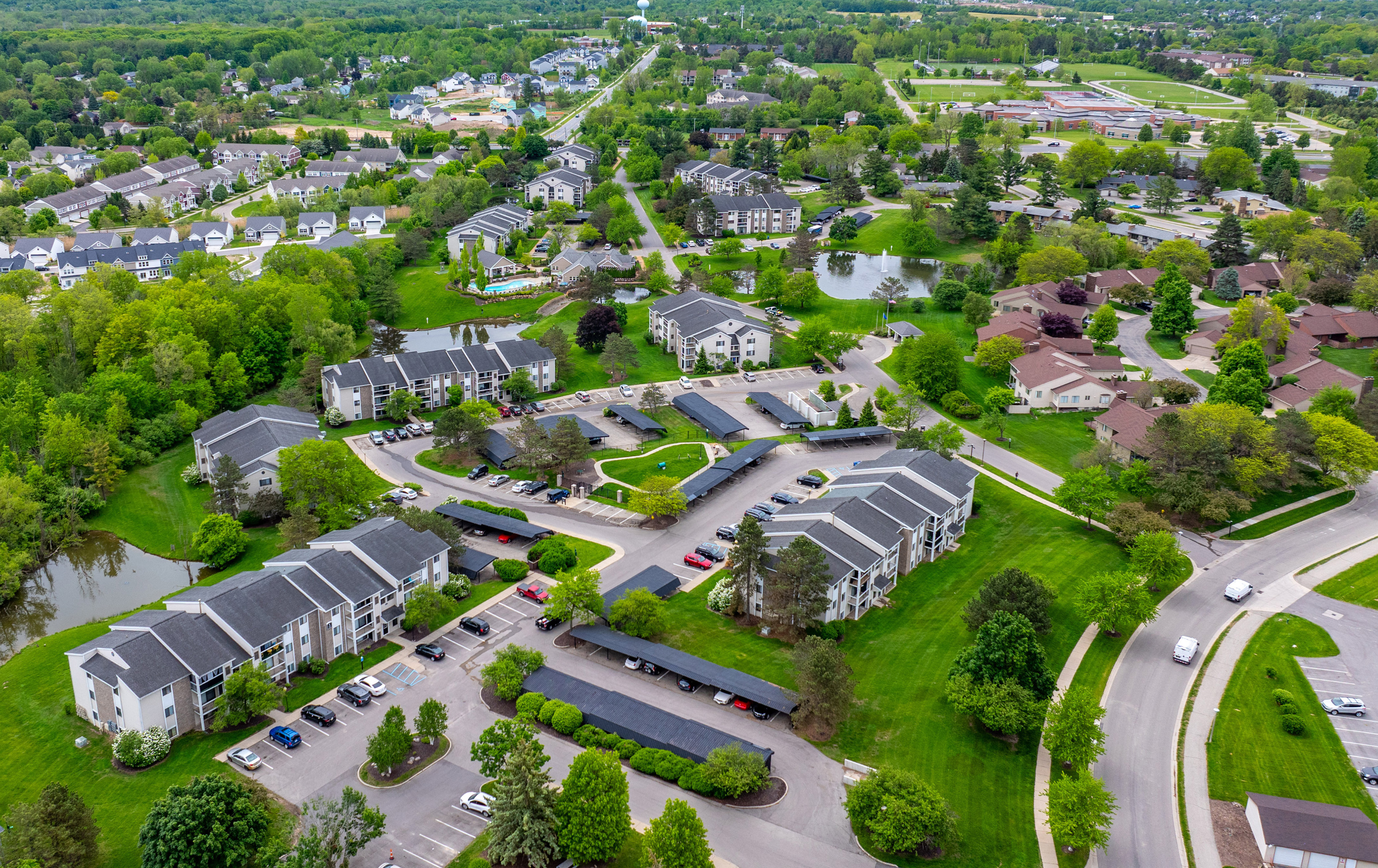
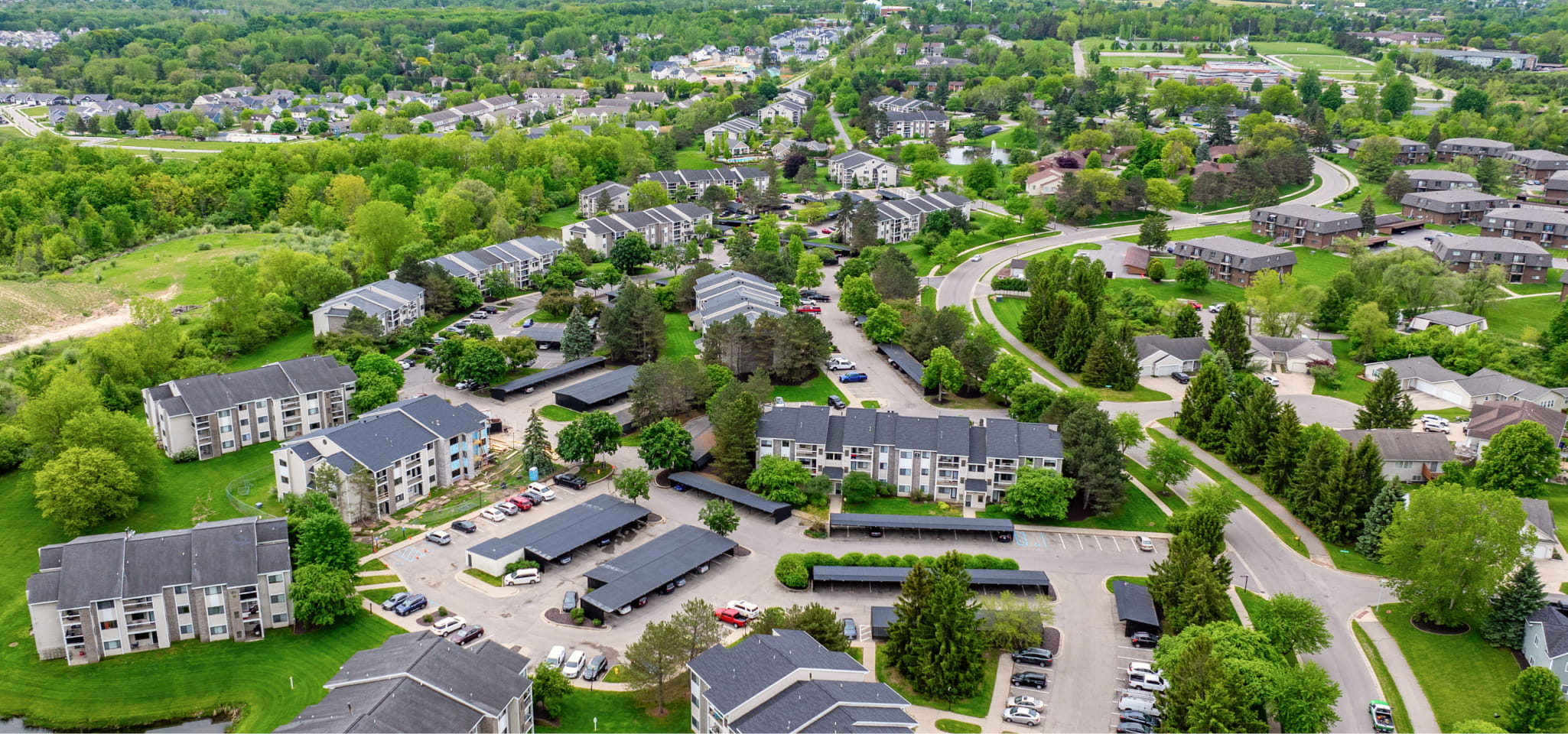
Grand Rapids and West Michigan are compelling for slightly different reasons. This is not a market that dominates national headlines, but that is part of the appeal. Colliers reported stabilized vacancy of 5.3%, asking rents of $1,360 per unit, and 2.4% annual rent growth in Q4 2025, while The Right Place describes the broader Grand Rapids area as a growing regional economy with a 2024 population of 1,168,409, a civilian labor force of 611,347, and 659,592 jobs. In other words, this is a secondary market with real scale, diversified employment, and healthier supply-demand balance than many larger metros.
That Midwestern tilt is also where Lightstone’s vertical integration and robust first-party data become especially useful. Lightstone’s multifamily footprint includes 14K+ units in the Midwest and 10K+ in Michigan. The portfolio averaged 94% occupancy in 2025, posted 2.7% year-over-year rent growth, and generated 5.8% year-over-year NOI growth. As of December 2025, it was producing roughly $19,060 of annualized revenue per unit and $10,637 of annualized NOI per unit, with an 80% fixed-rate / 20% floating-rate debt mix. Those figures matter because they suggest the regional thesis is not theoretical for Lightstone; it is already embedded in a large operating portfolio.
By contrast, some of the most crowded Sun Belt trades still look less attractive in this vintage. Apartments.com’s January 2026 data showed Austin down 4.8% year over year, with Denver and Phoenix both down 3.3%, explicitly tying that underperformance to elevated vacancy and aggressive new supply. Those markets may still have long-term demographic appeal, but there is more to successful multifamily investing at this point in the cycle. The name of the game for multifamily investors is timing, basis, and durable fundamentals.
Multifamily Investing – The Direct View
The case for multifamily investing in 2026 is not that every apartment market is attractive. It is that the asset class still offers one of the clearest combinations of essential demand, income durability, and inflation responsiveness in real estate, and that today’s market is finally rewarding selectivity again. Mortgage rates remain high enough to keep ownership difficult, occupancy remains firm, and the next development wave is already being curtailed.
For investors, that points toward a simple conclusion: the best multifamily opportunities this year are likely to be in middle-market assets, in supply-disciplined metros, where cap rates still compensate for risk and where operational upside does not depend on heroic rent assumptions. That is why markets like Chicago, Minneapolis–St. Paul, and Grand Rapids look more compelling in 2026 than many of the heavily built Sun Belt darlings of the last cycle. And it is why multifamily, handled selectively, still deserves serious attention now.

Lightstone DIRECT Team


Why Grand Rapids Now?