
Learn more about everything Lightstone DIRECT has to offer
Generating magic link...
How Mark-to-Market Strategies Influence Tenant Retention

Introduction
Marking rents to market is one of the most effective ways for real estate owners and investors to unlock value over the life of an asset. In real estate, “mark-to-market” simply means resetting rents to reflect prevailing market conditions. When a property’s existing leases were signed several years ago, they’re often below current market rents due to inflation, rent growth, or improved market fundamentals. By allowing those leases to expire and re-leasing space at higher rates, or by renegotiating renewals closer to market, owners can significantly increase net operating income (NOI). While this strategy can elevate returns, it only creates lasting value when occupancy is preserved and tenants are inclined to remain in place.
Mark to market strategies take different forms across CRE asset classes. Unlike multifamily, where the fundamental need for housing drives demand, industrial sector demand is a function of business cycles and tenant operations. This makes tenant retention in the industrial sector less predictable and places greater emphasis on understanding each tenant’s long-term viability within the property. These two imperatives – bringing rents to market and retaining tenants – are often at odds. Prices are going up, so wouldn’t tenants want to leave? How can we, as owners and investors, be proactive with tenant retention planning while still effectively executing a mark to market business plans and generating our targeted returns?
Successful mark-to-market execution requires not only understanding where rents can go, but also which tenants need to stay. It means aligning improvement plans, renewal discussions, and lease structuring to create mutual value - allowing owners to capture upside while maintaining stability. When properly executed, this asset management approach can turn lease rollover risk into continual NOI growth. Lightstone’s current investment strategy embodies this balance, combining a value-add focus on increasing cash flow with a rigorous approach to risk management. Tenant retention, concession strategy, and market rent analysis all play pivotal roles in determining whether an asset achieves its full potential over time.
What “Mark-to-Market” Really Means
Mark-to-market (MTM) refers to the difference between in-place rent and current market rent, expressed as a percentage. For example, if a tenant is paying $7 per square foot and the market has moved to $9, the asset has a 28 percent MTM opportunity.

In theory, closing that gap seems pretty straightforward; raise rents and boost value. In practice, it requires balancing opportunity with retention. There is often an inverse relationship between MTM and renewal probability: the higher the rent gap, the lower the likelihood the tenant will renew. The key is identifying the sweet spot where rents move closer to market levels while ensuring quality tenants remain in place.
Understanding Renewal Probability
Every lease has an assumed renewal probability, which represents the percentage chance that a tenant will stay once their term expires. It’s a small line item in underwriting, but it carries enormous weight. A higher renewal probability means greater predictability of income. Lower renewal probability means higher potential turnover costs, vacancy risk, and re-leasing uncertainty.
In today’s industrial market, renewal decisions are largely driven by underlying supply and demand dynamics and the real economic cost of relocation. Limited availability of comparable space, rising construction costs, and longer lead times for new supply often make moving disruptive and expensive. From a tenant’s perspective, relocation is not just a rent decision - it includes downtime, build-out costs, operational disruption, and the risk that a new space is not functionally equivalent to the existing one. When a building already fits a tenant’s operational needs, the opportunity cost of moving can be significant.
At Lightstone, renewal probabilities are not solely based off of numbers on a spreadsheet. They are informed by direct tenant engagement, operational data, and a deep understanding of what keeps tenants “sticky” to a particular space. In other words, how dependent are they on that specific location? What would it cost them to move? How many comparable options are available in the market? These questions help determine how aggressively we can mark rents to market without jeopardizing occupancy.
Weighted Average Lease Term (WALT)
Not only is it key to identify the nominal gap between current rents and market rents, mark to market success also depends on the timing of execution. This time-weighted metric is the weighted average lease term (WALT) of the property. Marking rents to market can only be done at the end of a lease term. From an acquisition standpoint, it is beneficial to seek out properties with shorter WALTs to be able to increase rents while the project is still being held. A property with a longer WALT is attractive in a non-mark-to-market scenario: when the property is already stabilized at a lease rate that is at or close to market rents.
Lenders view short WALTs as riskier since the income stream is less secure. That can lead to more conservative underwriting, lower loan-to-value ratios, higher interest rates, or additional reserves. Some lenders may even require lease extension agreements as a condition of financing. In markets with rising rents and tight vacancy, near-term lease expirations can provide a mark-to-market upside, allowing investors to reset below-market leases to current rates. The key is whether fundamentals support that thesis.
Lightstone targets industrial assets in markets with durable demand drivers and limited new supply - such as logistics, manufacturing, and distribution hubs in the Midwest and Southeast. In these markets, tenant retention rates are high and replacement space is scarce, which limits downside even when leases roll.
Tenant Stickiness and Renewal Strategy
Not all tenants respond the same way to rent changes. A local manufacturer with customized build-outs may be far more committed to their space than a warehouse tenant who can relocate easily. Understanding this “stickiness” is essential.
Before a lease rolls, Asset Management evaluates the tenant’s use, the capital they’ve invested in improvements, their local labor base, and proximity to customers or highways. If these factors point to high stickiness, we can confidently move rents closer to market with limited risk of vacancy. For more mobile tenants, we often consider measured increases or tenant improvement allowances to encourage renewal.
Incentivizing Renewal at Market Rent
When a lease is significantly below market, Asset Management will often explore small, targeted incentives to help bridge the gap. This might include fresh paint, LED lighting upgrades, or modest tenant improvements that enhance the space without compromising returns.
A good example is an industrial asset Lightstone owns in Columbus, Ohio. The building had a 484,875 SF tenant with an expiring lease at $2.90 PSF. After several conversations, we were able to evaluate what incentives would need to be presented for the tenant to renew at market value. The tenant ultimately renewed at $4.35 PSF, representing a 50% mark-to-market increase. In return, we provided meaningful upgrades to the premises, including a full LED lighting retrofit throughout the warehouse and an office refresh, totaling approximately $2.00 PSF in tenant improvements. Importantly, the asset had sufficient NOI “slack” to absorb these upfront costs, and the resulting rent increase more than offset the investment, producing a net positive economic outcome from day one of the new lease term.
The goal is to achieve mark-to-market increases intelligently. A tenant who receives improvements that enhance the productivity and functionality of their space is more likely to accept a higher rent, especially when the upgrades address real business needs. This can include HVAC replacements, roof enhancements, or an office buildout. This approach preserves occupancy while steadily lifting income toward true market levels.
When Tenants Vacate: Managing Turnover Risk
If a tenant does decide to vacate, the focus quickly shifts to minimizing downtime and re-leasing costs. In industrial leases, tenants are expected to give 9 to 12 months of notice prior to vacating, which allows for substantial time to plan accordingly. Lightstone’s asset management team coordinates early on Vacant Space Prep (VSP) which can include painting, repairing office areas, upgrading lighting, and improving curb appeal so the space shows nicely to prospective new tenants when they tour.
Accurate forecasting of turnover costs and downtime helps ensure the asset meets or beats underwriting assumptions. Having a deep understanding of the market and broader supply and demand drivers is key for forecasting downtime. Lightstone’s nationwide reach and large industrial portfolio allows us to spot trends in tenant behavior before other operators.
Additionally, having an understanding of which tenants are out in the market looking for new space or are planning to be out in the market can also help mitigate potential downtime risk. A realistic understanding of these factors allows us to assess whether re-leasing will ultimately produce a higher net effective rent than a renewal at a slightly discounted rate.
Case Study: Abernathy Industrial Park
Abernathy Industrial Park, a recent Lightstone acquisition, is a textbook example of this type of value-add strategy in action. The property is a six-building, 700,000-square-foot Class B shallow-bay industrial park located in the heart of the Greenville–Spartanburg logistics corridor, one of the Southeast’s most dynamic and supply-constrained industrial hubs. The asset’s favorable location provides connectivity to Atlanta, Charlotte, and Charleston, as well as immediate proximity to Inland Port Greer and Greenville–Spartanburg International Airport. The property functions like Class A product with modern clear heights, ESFR sprinklers, and efficient loading across all six buildings. Originally built in the 1980s and 1990s and recently upgraded with new roofs, LED lighting, and refreshed office space, Abernathy has experienced only about three months of cumulative downtime over its 40-year history.
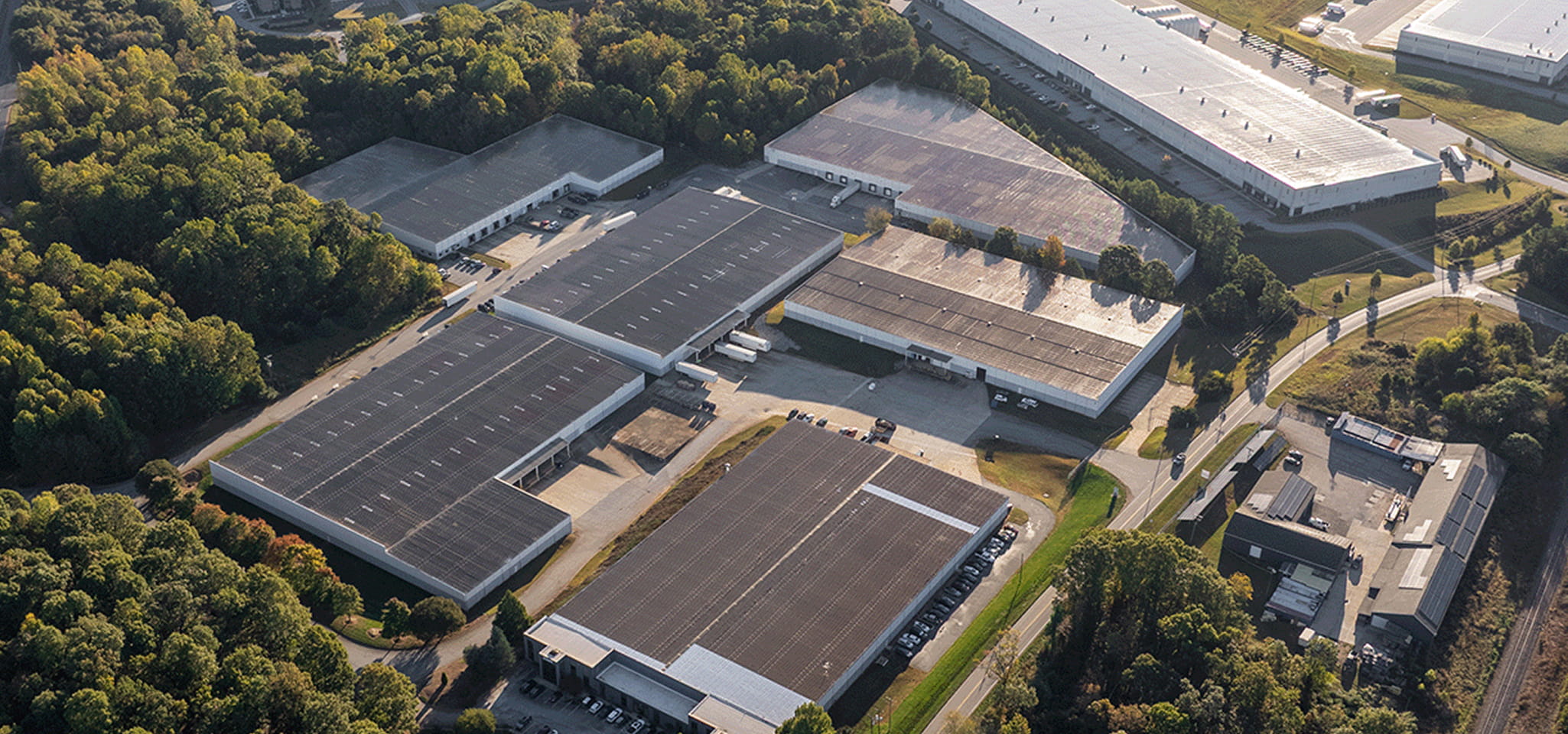
Lightstone acquired the asset off-market at approximately $69 per square foot, which is less than half of current replacement cost, providing meaningful downside protection and rent flexibility in a market with limited new mid-bay supply.
At acquisition, Abernathy is fully occupied by a diverse mix of manufacturing, packaging, and logistics tenants that support major OEMs such as BMW, Mercedes, and First Solar. Several tenants operate under Foreign Trade Zone status and have made significant investments in their spaces, creating strong operational stickiness, as outlined in the Abernathy overview. In-place rents averaged just under $5 per square foot compared to market rents in the low-to-mid $5s, offering clear mark-to-market potential. With a weighted average lease term of just under three years, Lightstone is projected to systematically capture that upside throughout its four-year hold period.
Rather than immediately pushing all leases to full market, the mark-to-market strategy is executed selectively. Renewal probability is assessed specifically in the context of rent positioning - determining how much of the gap to market can be captured at each rollover without introducing unnecessary vacancy risk. For tenants with highly integrated operations, rents are expected to be moved closer to market with minimal friction. For more flexible users, incremental rent increases are paired with targeted capital projects such as LED retrofits, dock upgrades, and refreshed office improvements to support renewal at higher rates and accelerate income growth over time.
Through disciplined execution and proactive tenant engagement, Lightstone is expected to maintain occupancy above 95 percent while steadily bringing rents to market. Cash flow has exceeded underwriting expectations, and asset value has meaningfully increased. Abernathy illustrates how mark-to-market rent strategies, when paired with deep operational insight and tenant retention planning, can unlock durable value in industrial assets while preserving stability.
Mark-to-Market Strategy – Bringing It All Together
Achieving mark-to-market rents and tenant retention are not necessarily mutually exclusive. When managed together, they create a cycle of sustainable value growth. Understanding renewal probabilities, tenant stickiness, and turnover dynamics allows us to apply MTM strategies thoughtfully—protecting income while capturing upside.
In Class B shallow-bay industrial assets, where flexibility and affordability drive tenant decisions, this balance is especially powerful. Lightstone’s breadth and scale allow us to identify compelling mark-to-market opportunities, while our vertically integrated platform enables nuanced execution. Acquisitions and asset management work in lockstep to determine when to push rents, when to invest modest capital, and how to retain tenants without sacrificing long-term economics.
For investors, the takeaway is simple: consistent cash flow and appreciation are not a trade-off. They are the outcome of disciplined asset management and a clear understanding of how mark-to-market rents influence tenant retention and long-term value creation.


Maya Green
Maya Green is an Associate on the Capital Formation team at Lightstone DIRECT, where she supports fundraising strategies and investor outreach to drive capital formation and strengthen investor partnerships.