Garden-Style Apartments: The Quiet Case for Two Stories and Surface Parking
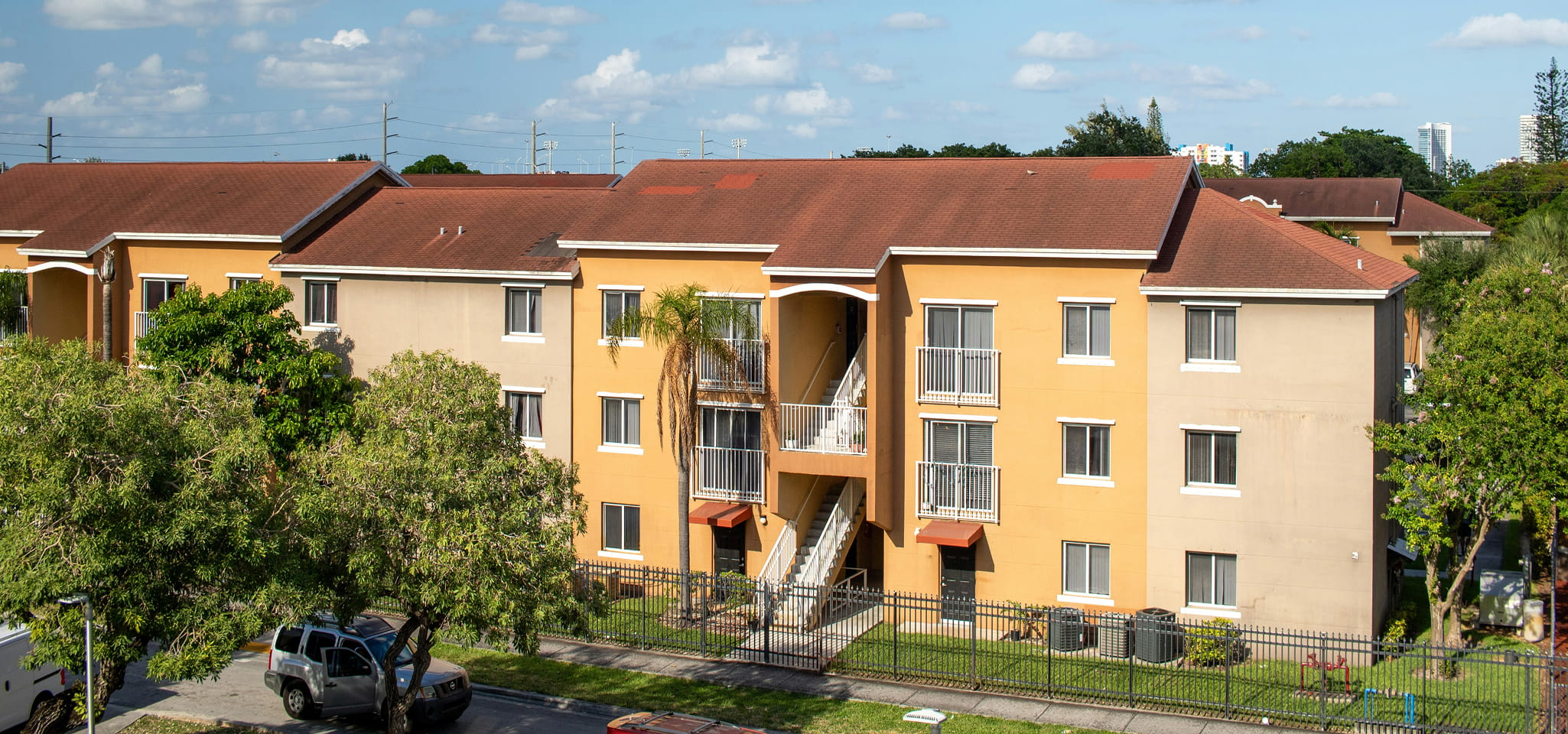
You have driven past ten thousand of them without once looking up, because there is nothing above the third floor to look at. Low brick-and-siding buildings set back from the road, arranged loosely around a lawn and a parking lot, a leasing office with a flag out front and a pool nobody is using. The landscaping is the whole aesthetic argument, which is why someone in the 1960s started calling the format "garden-style" and the name stuck. It is the least photogenic corner of real estate. It is also, quietly, one of the most reliable places American renters have lived for sixty years, and one of the more sensible places a passive investor can put money in multifamily.
Garden-style apartments show up constantly in offering materials, usually as a single line in a property description that the reader skims past on the way to the return projections. That is a mistake. The format is not a cosmetic detail. It shapes what a building costs to buy, what it costs to renovate, how hard it is for a competitor to build something newer down the street, and therefore how durable the rents are. Before you evaluate the sponsor's business plan, it helps to understand the thing the plan is being run on. So let me make the unglamorous case for the two-story walk-up.
What "Garden-Style" Means
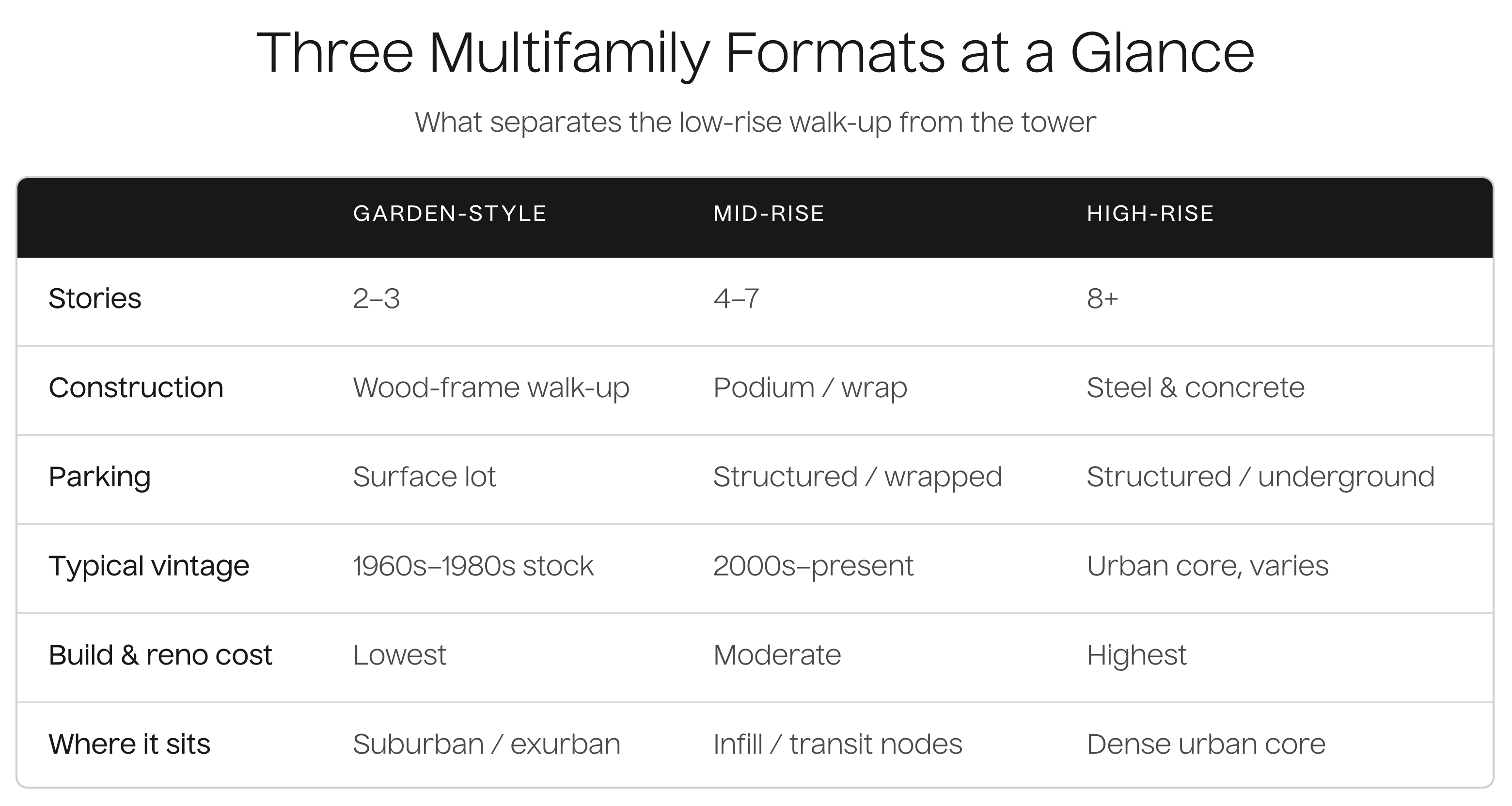
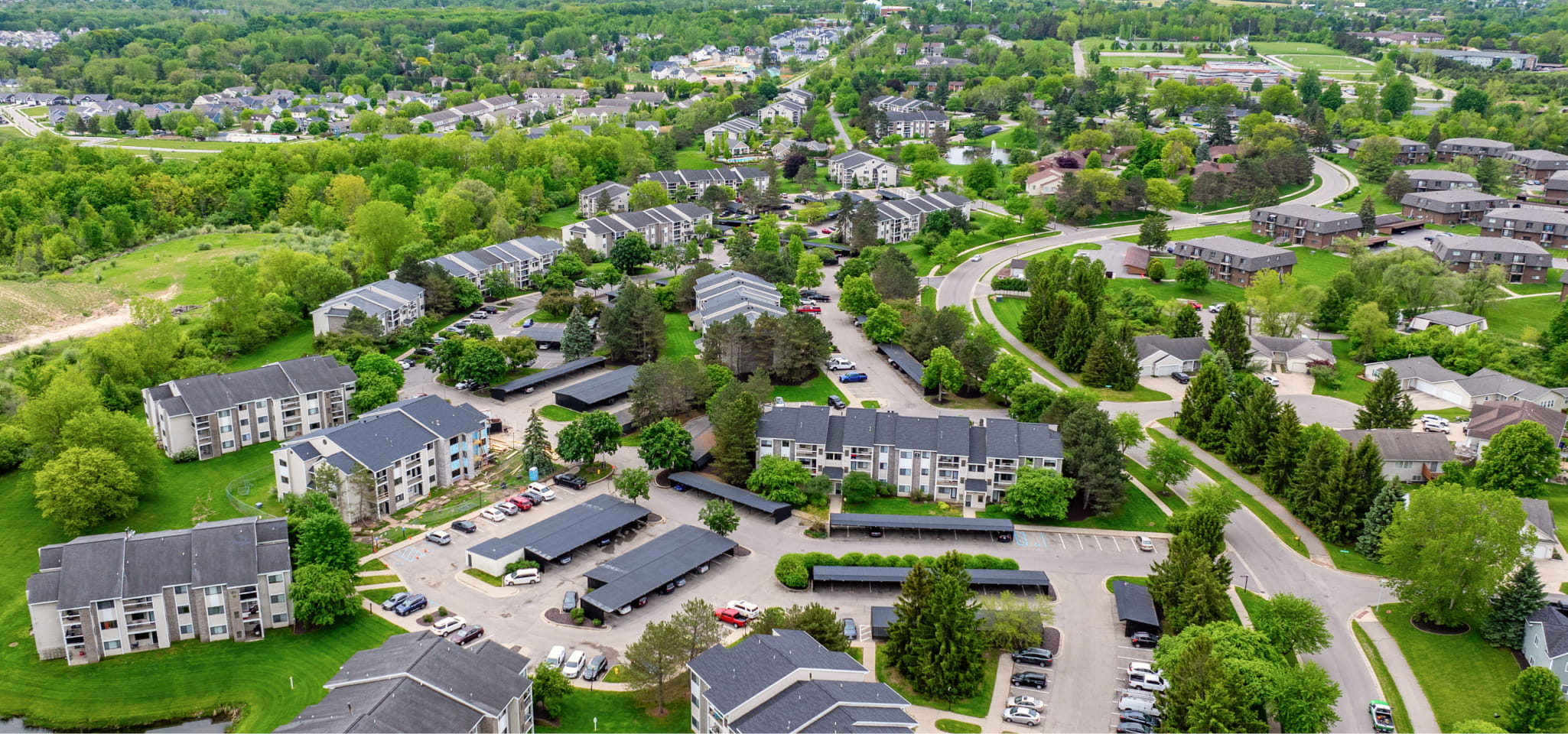
A garden-style apartment community is a low-rise multifamily property, typically two or three stories, with no elevators, built as a cluster of separate buildings across a landscaped site with surface parking. That is the whole definition, and each piece of it carries weight.
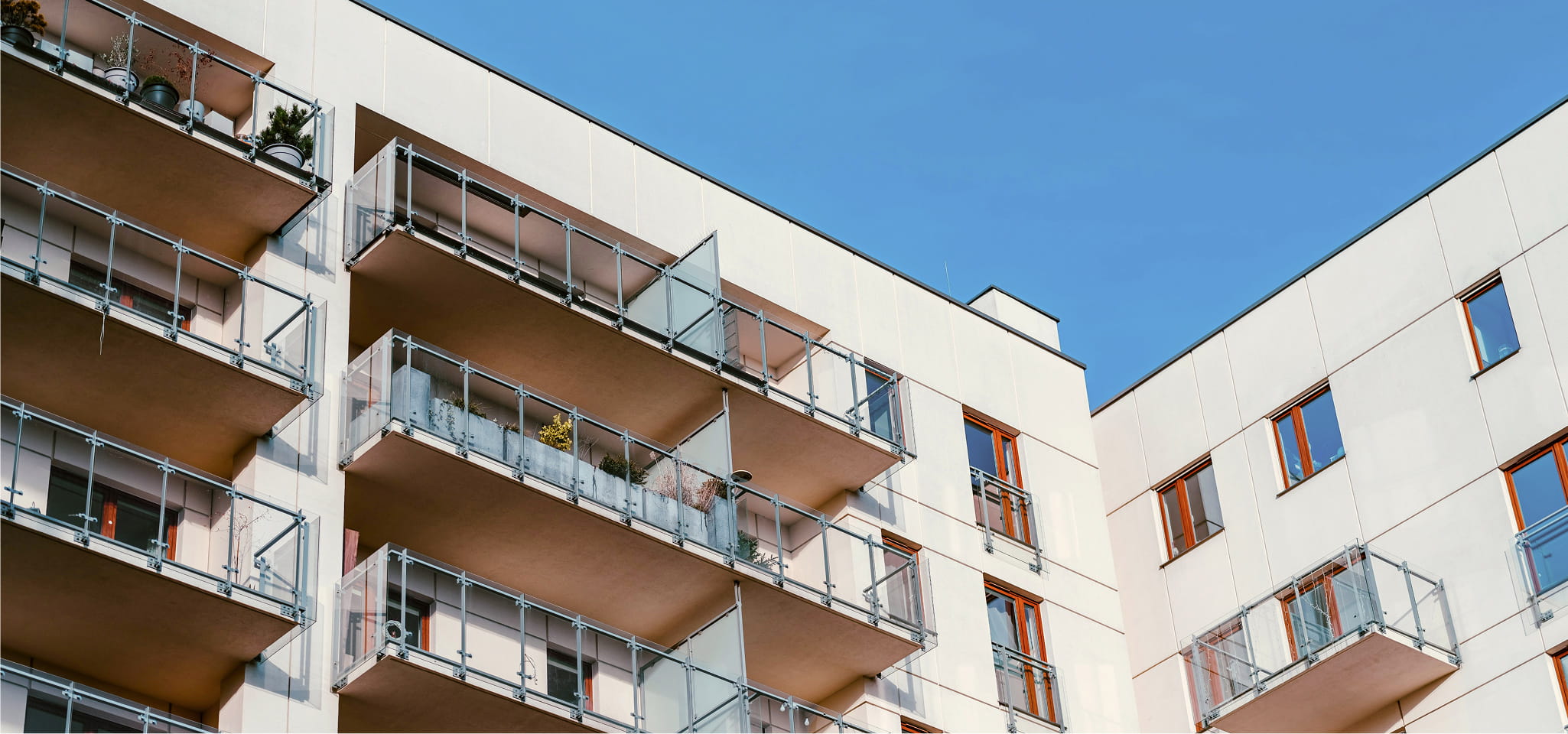
Low-rise and walk-up means wood-frame construction rather than steel and concrete. Surface parking means a paved lot, not a structured garage or an underground deck. Multiple buildings on a landscaped site means lower density, more green space per unit, and the suburban or exurban locations where land is cheap enough to spread out. Contrast that with a mid-rise, which stacks four to seven stories over a concrete podium and usually wraps or hides its parking, or a high-rise, which goes vertical with an elevator core, structured parking, and a construction budget to match.
In institutional terms, this is almost always Class B or Class C product - not the Class A towers that dominate downtown skylines, but the older, well-located, workforce-oriented stock that makes up the bulk of America’s actual rental housing. That distinction matters for underwriting as much as for architecture: Class A assets compete on amenities and command premium rents, but they’re also the first to feel oversupply when a market overbuilds. Class B garden-style assets compete on value, and value doesn’t go out of style.
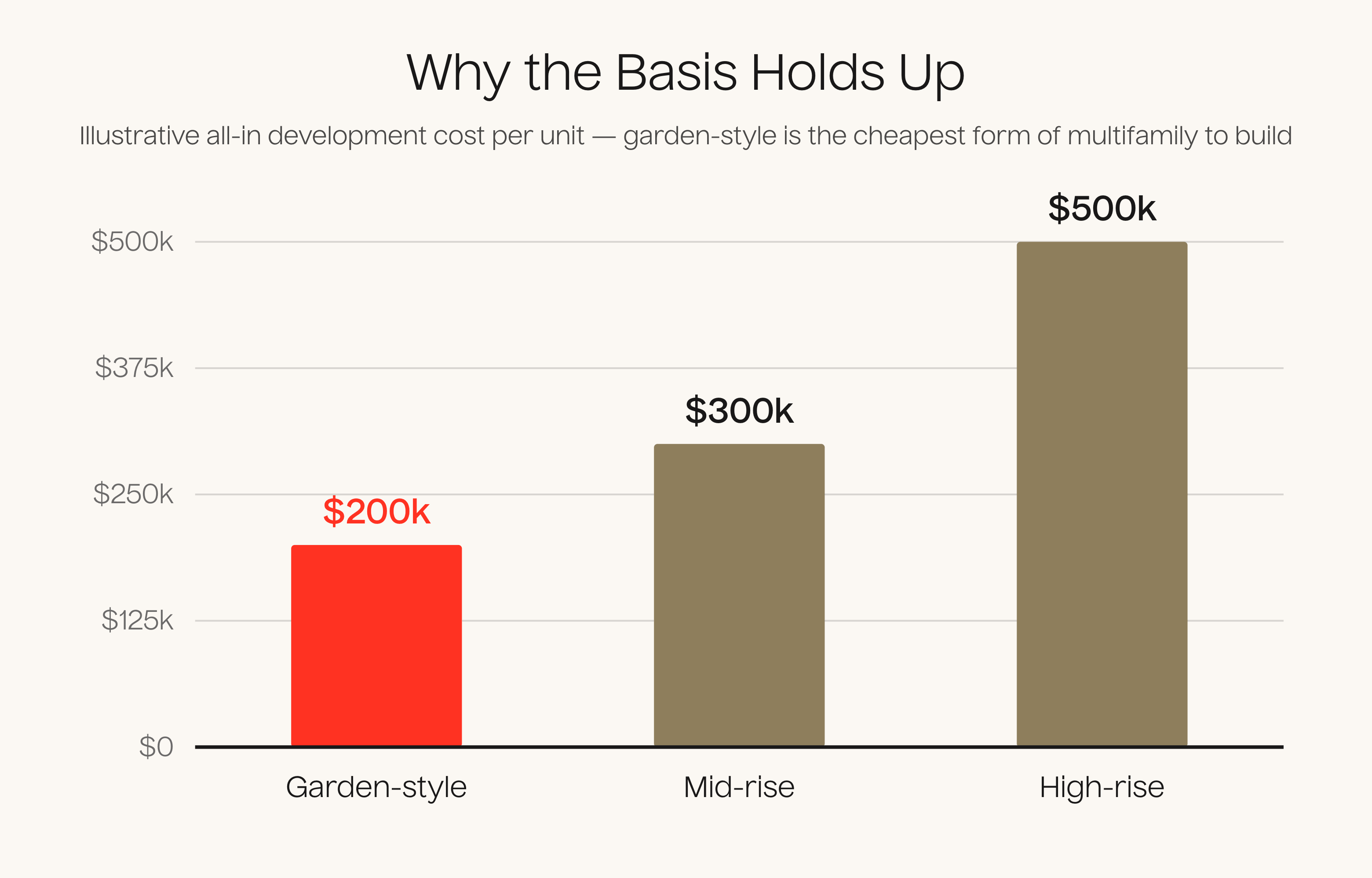
The distinction is not about prestige. It is about cost, and cost is where the investment case begins. A garden-style building is the cheapest form of multifamily to build, to maintain, and to renovate, because you are working with simpler structures, no elevators to service, no parking deck to seal and light, and units you can reach with a ladder and a truck instead of a freight elevator and a permit. The format that photographs the worst tends to pencil the best.
Why Sponsors and LPs Favor the Format
Three structural features make garden-style apartments a favored substrate for value-add multifamily, which is the strategy of buying an older, under-managed property, renovating it, raising rents to the level the improvements justify, and holding for income and eventual sale.
The first is a low and defensible cost basis. Existing garden-style stock generally trades well below what it would cost to build anything new on the same site, and far below what it would cost to build a denser product. That gap is the investor's friend. When you own an asset that would cost more to replace than you paid for it, new competing supply has to clear a higher rent hurdle just to justify breaking ground, which protects your rents from being undercut by a shinier building next year.
The second is renovation efficiency. In a value-add deal, the return is manufactured in the units: new flooring, updated kitchens and baths, better fixtures, in-unit laundry where it fits. Garden-style properties are simply cheaper and faster to renovate than towers. There is no elevator to tie up, no residents stacked ten floors above the work, and a contractor can stage a truck outside the building instead of threading materials through a lobby. Lower renovation cost per unit means more of every dollar reaches the rent premium, which is the entire point of the exercise.
The third is durable, workforce-oriented demand. Garden-style communities cluster in the suburbs, near the schools, jobs, and lower cost of living that draw households forming families and looking for space. That renter base is large, it is not chasing the amenity arms race of a downtown high-rise, and it tends to stay. Boring, in a rent roll, is a compliment.
Where the Format Is Weak
A fair case names the other side, and garden-style has real limitations that a careful LP should weigh rather than wave away.
It is land-inefficient. Spreading two-story buildings across a big site works where land is cheap and fails where it is not, which is why you do not see garden-style rising in Manhattan or downtown Austin. In supply-constrained infill markets, the density just is not there, and a garden-style basis can look expensive relative to the rent the submarket supports.
The stock is old, and old buildings surprise you. Much of the existing garden inventory dates to the 1960s through the 1980s. That vintage is exactly what makes the value-add opportunity real, but it also means aging roofs, original plumbing, dated electrical, and the occasional foundation or drainage problem that no renovation budget fully anticipated. The capital reserve on a 1972 garden property is not a formality. It is the difference between a business plan that survives contact with the building and one that does not, because a forty-year-old building always carries deferred maintenance the model did not fully price.
And the format is submarket-dependent to a degree the pretty return projections tend to underplay. A garden-style deal is a bet on a specific suburban location: its job growth, its school district, its supply pipeline, its path of development. Get the submarket wrong and the cheapest construction type in real estate will still sit half-empty. The building is only as good as the ground it spreads across.
How Lightstone Reads the Format
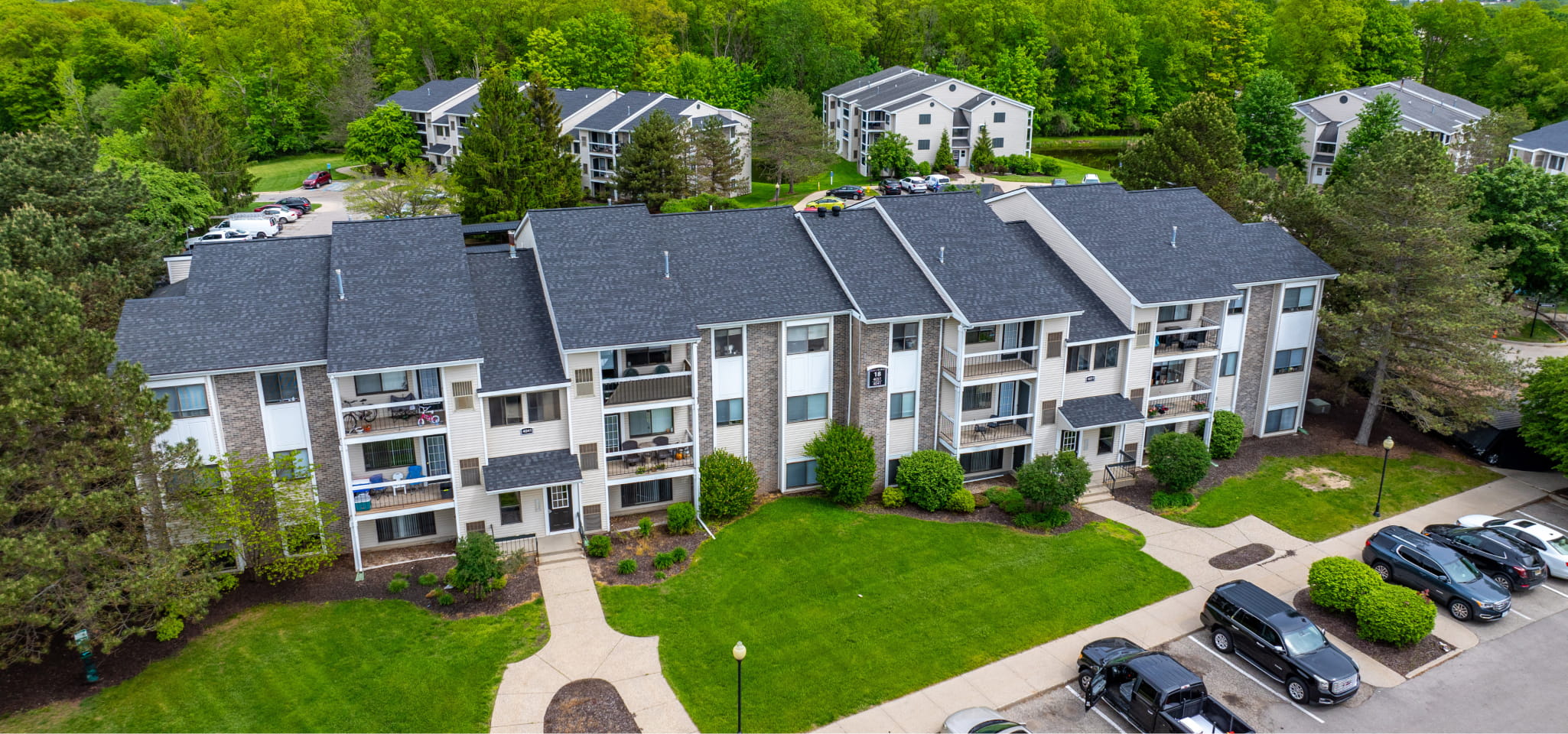
Lightstone's individual-investor multifamily strategy leans toward value-add garden and low-rise product in growing suburban submarkets, and the reasons are the three above: a basis below replacement cost, renovation economics that put more of each dollar into the rent premium, and a workforce renter base that does not evaporate when the amenity fashions change. Our current Grand Rapids multifamily project, Hidden Lakes, is a garden-style value-add property of exactly this shape, chosen for the same unglamorous virtues the format has always offered.
None of that is a promise. A low basis can still be the wrong basis in the wrong submarket, and a forty-year-old building will always find a way to spend your reserve. What the format offers is not certainty but a favorable starting point, and the discipline is in the underwriting on top of it: a conservative read of the submarket, an honest capital reserve for the surprises, and a rent premium supported by what comparable renovated units are achieving rather than what the model would like them to. Lightstone puts more than 20% of the equity into every deal alongside its investors, against an industry norm of 2% to 5%, which is another way of saying the firm has to believe the unglamorous case before it asks anyone else to. Across 57 realized investments since 2004, that discipline has produced a 27.6% realized IRR and a 2.54x equity multiple. Past results do not guarantee future ones, and the format does not either.
The Building You Never Looked At
The garden-style apartment is the part of the real estate world that gets no covers, no renderings, no champagne at the ribbon-cutting. It is two stories of siding around a parking lot. Working families have rented these buildings through every cycle since your grandparents did, and the owners who held them collected rent the whole way. For a passive investor, the format's plainness is the argument, not a strike against it: a cost basis you can defend, renovations you can afford, and a renter who wants a decent home near a good school more than a rooftop dog spa. Look up from the return projections long enough to notice what the building is made of. The least photogenic asset in the offering is often the one with the steadiest rent roll and the sturdiest basis beneath it.

Soren Godbersen
Soren Godbersen is Chief Growth Officer at Lightstone DIRECT, where he oversees investor experience, day-to-day operations, marketing, and strategic direction of the group. Previously Godbersen was Chief Growth Officer at EquityMultiple, a category-defining real estate investment platform for accredited investors where he led the Marketing and Investor Relations Teams, helping to grow the firm’s AUM to nearly $1B, and investor network to over 5,000 individual high-net-worth investors. Godbersen holds a Bachelor's of Arts in Economics with Honors from Whitman College.


[Video] Frequently Asked Questions: Hidden Lakes Apartments



Case Study: Suburban Detroit Multifamily Portfolio
[Webinar] New Multifamily Opportunity: Hidden Lakes Apartments

[Video] Lightstone's Multifamily Playbook

Whitepaper: Multifamily Real Estate in 2026

Multifamily Investing in 2026: Why Selectivity Matters More Than Ever
Why Grand Rapids Now?
Is garden-style multifamily Class A, B, or C?

Most existing garden-style stock is Class B or Class C: older, well-located, workforce-oriented housing rather than the newer Class A towers built for amenity-driven renters. That’s part of the investment case: Class B assets compete on value, which tends to hold up better across market cycles than amenity-driven Class A competition.