The Lightstone Letter — September 2026
.jpg)
Real estate investing is about buying buildings, of course. But it is not merely about the building and its core functions; the investment is about a broad constellation of economic factors, within and outside of the local economy. That’s why Lightstone’s underwriting of an industrial asset touches on trade flows and stock price movements of potential tenants. Or why area median income dynamics are considered as part of evaluating a retail asset. And so a fundamental rewiring of the economy should mean a fundamental rewiring of our outlook as real estate investors.
The AI buildout, already well underway, is no less than a fundamental rewiring.
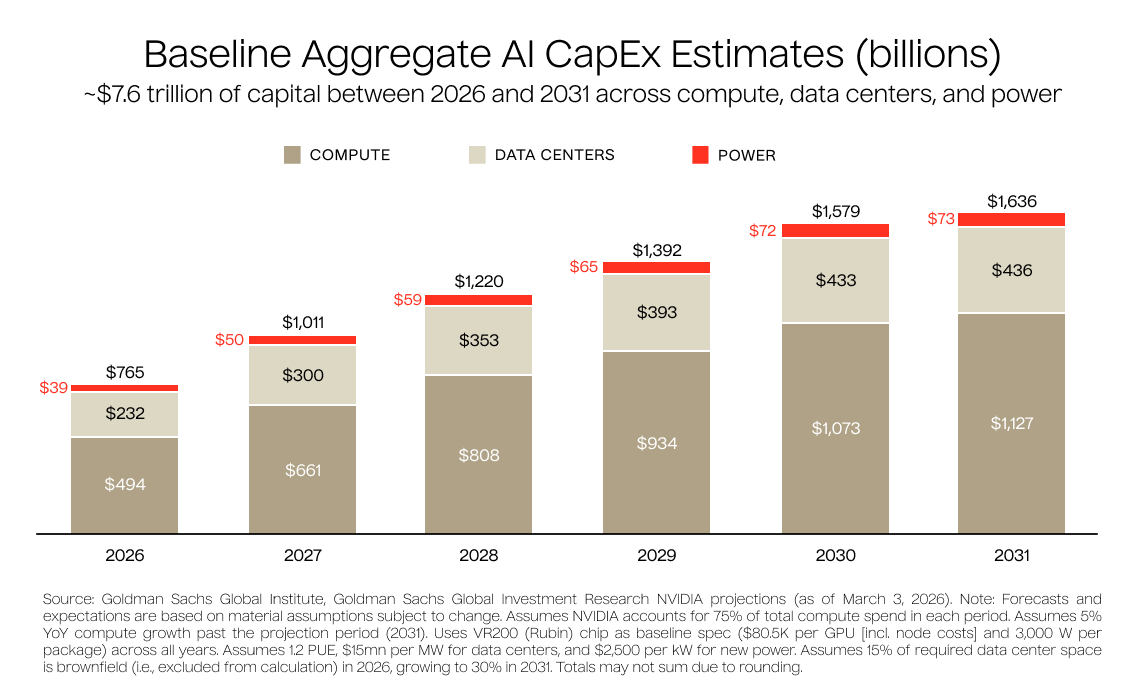
AI cap ex is a new frontier of geopolitical tensions. The maturation of AI infrastructure is key to the viability of financial markets in the U.S. (arguably too much so). Adoption and refinement of AI tooling is painfully critical to macroeconomic health as a whole: with moderating population growth, average productivity of inputs is the only remaining lever for future growth of the economy as a whole. The four largest technology companies plan to deploy roughly $725 billion of capex this year, the overwhelming majority on AI data centers. This is up about 77% from last year, and on pace to consume a share of GDP that rivals the housing boom of the mid-2000s, but manifesting at nearly twice the speed. It may be the largest concentrated reallocation of capital, labor, and electricity this economy has attempted since the interstate era. Time makes fools of us all, especially those who make bold financial prognostications. But this sure looks like a fundamental rewiring.
A Crowding Out
Put simply: the AI buildout is another challenge to new supply, as data centers compete with other types of commercial construction for the same land, labor, and hard capital. Add this to the other macro-supply headwinds (increased energy prices, tariffs on key construction materials, high cost of capital, immigration policy-driven labor force reduction). Warehouses and retail are among the sectors expected to end 2026 with sluggish growth in new construction, at best.
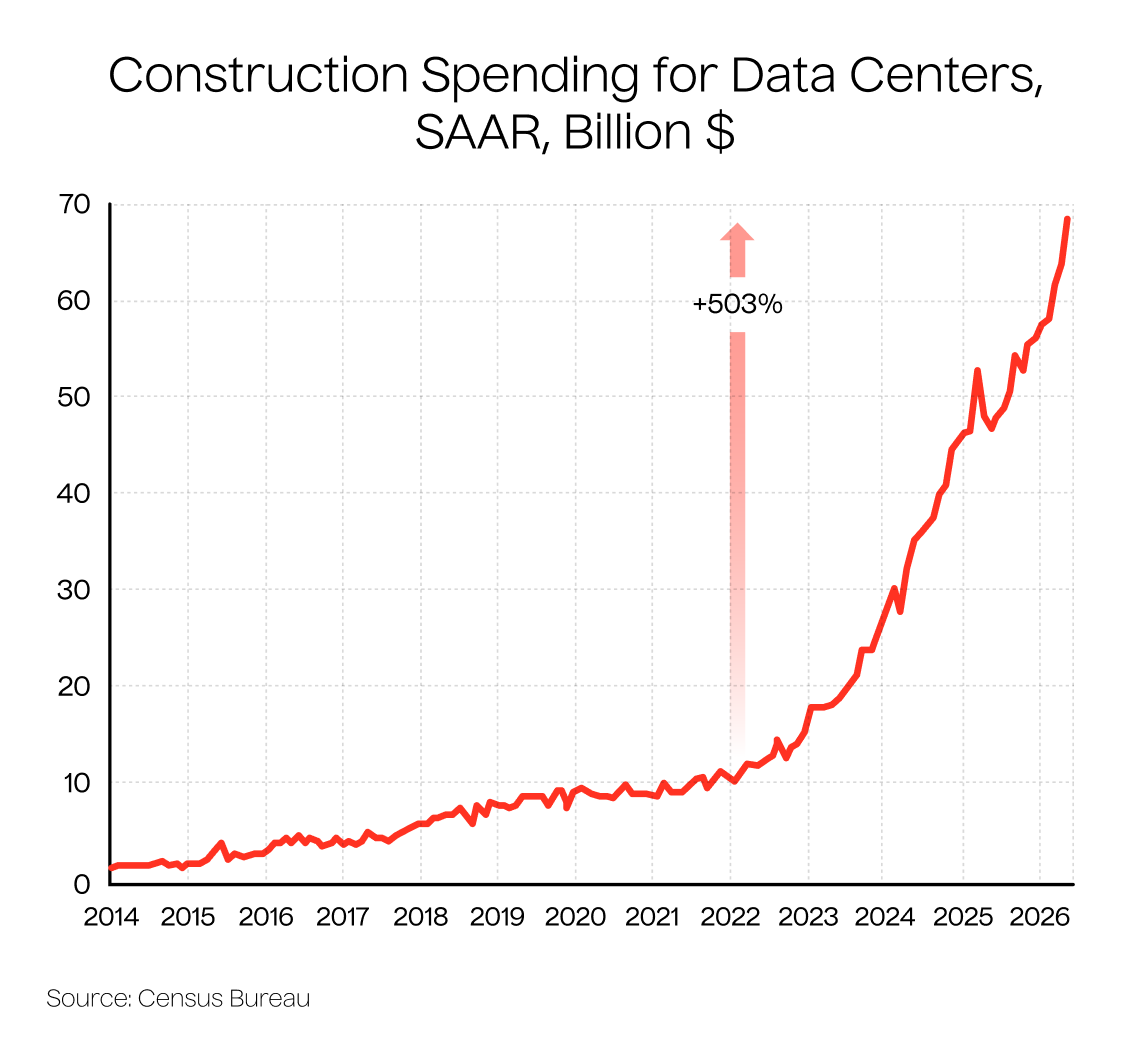
Contrast the expected 2026 cap ex on data center construction vs. warehouses. The warehouse sector accounted for $55.4B of new construction cost in 2025, down from an all-time high of $80.5B in 2023.
The Replacement Gap Widens
Data center construction may be somewhat immune from normal economic gravity – the financing is there (circular as it may be) and, barring rapid mobilization by anti-AI factions, that construction will go forward. Other sectors must contend with rapidly ballooning construction costs. Associated Builders & Contractors estimates that non-residential construction input costs increased 12.6% in the first two months of 2026 on an annualized basis. And this before the reignition of the Canada-U.S. trade war, which may further impact key inputs like aluminum.
Meanwhile, treasury yields are at the highest level in a quarter century, and markets have priced in a 50%+ probability of a Fed rate hike by year’s end. All to say that the cost side of the ledger is not looking good for new supply in sectors like retail and small-bay industrial. While we could not have quite predicted the degree or specifics, these dynamics are generally why Lightstone has pursued a “buy-not-build” approach, targeting assets well below replacement cost, and strategies requiring, at most, light value-add levels of cap ex. To take the current group of Lightstone DIRECT offerings, for example:
- OKC Outlets ~37% below replacement cost, with no competing outlet centers within 100 miles.
- Hidden Lakes ~40% below replacement cost, and serving a workforce renter demographic.
- Arlington Shallow Bay Industrial ~45% below replacement cost.
Demand Drivers & Labor Displacement
Turning to the other component of the Marshallian cross, what about all those jobs that AI is theoretically going to replace?
To begin with, it is only happening in sections of the economy, and very smart people have very different opinions about how, and to what extent, job displacement will play out. The more sanguine (generally older) economists expect this will be no different from the sea-change technologies of the past – with labor market changes happening gradually, and ultimately in a positive-sum manner. The doomers (generally younger) hold that we’ve never seen a sea-change technology like this. Even in the worst-case scenario, however, consensus holds that the machines will come first for the less tangible, less-experienced white-collar jobs – analysts, management consultants, and junior coders. The nurses, teachers, plumbers, electricians, and car salesmen should have little to fear in the short term.
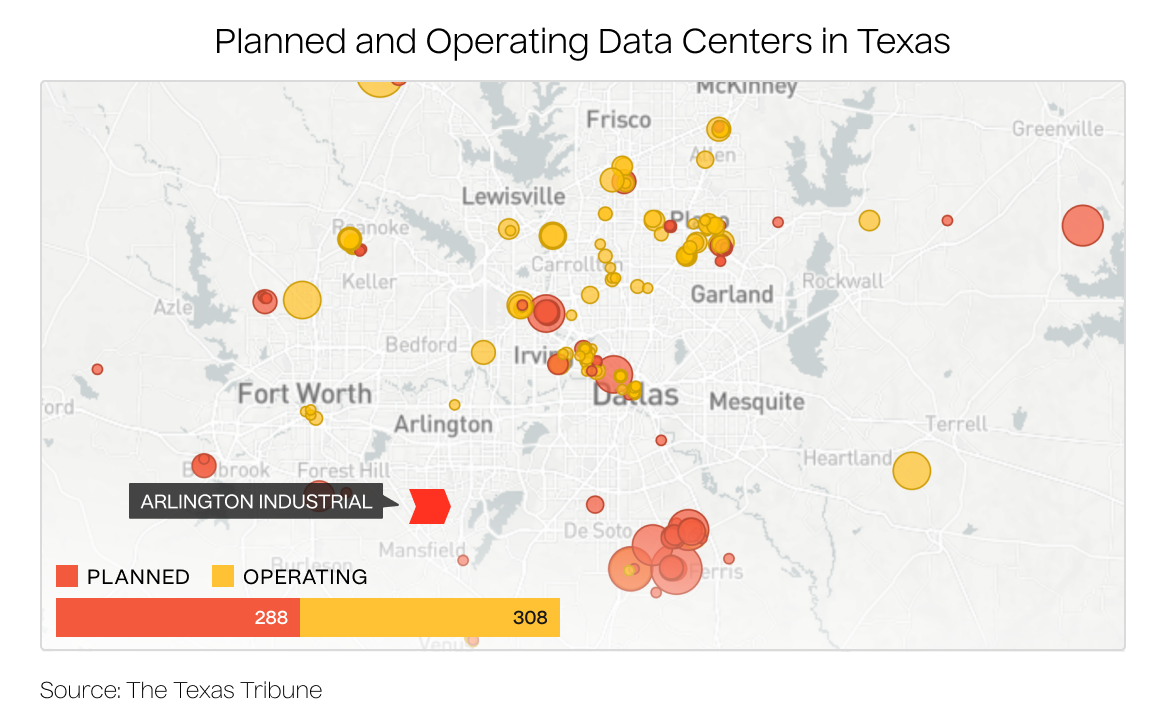
Again, this factor may benefit a less glamorous form of real estate investing, across sectors. The markets, the people, the small-and-medium-sized businesses that make up the long tail of the American economy may stand to gain, at least relatively, from the AI buildout. At least over the next few years, the data center buildout will benefit skilled blue-collar work. This may include areas with wide-open space, diversified energy grids, and an open posture toward data center development.
Even the most welcoming jurisdictions are now navigating the brisk winds of public opinion, however. Texas, perhaps the friendliest state for the asset class, paused new data center grid connections in August after interconnection requests reached 474 gigawatts — roughly five times the state's record peak demand (per ERCOT, about 90% of those requests came from data centers). Note that this is not a red light, but a yellow one. When even Texas is rationing grid access, the buildout's competition for power and capacity is not easing anytime soon. The scarcity the buildout creates, in electricity, in labor, in financing, rebounds to the benefit of what's already standing, across real estate asset classes.

Soren Godbersen
Soren Godbersen is Chief Growth Officer at Lightstone DIRECT, where he oversees investor experience, day-to-day operations, marketing, and strategic direction of the group. Previously Godbersen was Chief Growth Officer at EquityMultiple, a category-defining real estate investment platform for accredited investors where he led the Marketing and Investor Relations Teams, helping to grow the firm’s AUM to nearly $1B, and investor network to over 5,000 individual high-net-worth investors. Godbersen holds a Bachelor's of Arts in Economics with Honors from Whitman College.